

Custom Residential, Landscape Architecture
Designing Your Backyard Wellness Retreat
A hot tub is a feature. A wellness retreat is an experience and the difference is design. From cedar saunas and cold plunge pools to outdoor yoga platforms and curated water features, we’ll walk you through how we design a backyard sanctuary that restores, performs, and reflects exactly how you live.

July 10, 2026
Getting a hot tub is a great first step, the jets and warm water are genuinely wonderful, but it’s just the beginning of what a backyard can become. The world’s best spas succeed because they’re environments, not just a collection of features. They’re designed holistically, with each element working together to pull you out of the pace of your day and into something slower, quieter, and restorative. That kind of experience is absolutely achievable in your own backyard. And here in the Pacific Northwest, we have something the rest of the country quietly envies: a climate, a landscape, and a design culture that are almost perfectly suited for it.
Why the Pacific Northwest is made for backyard spas.
People assume grey skies and rain work against outdoor living. We’d argue the opposite. Our mild winters, dramatic evergreen backdrops, natural stone, and deep cultural affinity for the outdoors make the Pacific Northwest one of the best places in the world to build a private wellness retreat. Unlike climates with brutal winters or scorching summers, our region genuinely supports year-round outdoor use when a space is properly designed for it. A well-placed sauna makes a January evening something to look forward to. A cold plunge feels entirely different here than it does in Phoenix in August. And the materials available to us: basalt, cedar, Douglas fir, mossy groundcovers; ornamental grasses moving in the coastal breeze are a near-perfect palette for this kind of space.
That sense of place matters to us. Whatever we design should feel like it grew there.
Thinking in Experiences, Not Features
The first thing we ask clients when starting a wellness retreat project isn’t, “Do you want a sauna?” It’s, “What do you want to feel when you step outside?” That shift in framing changes everything. Once you’re designing around an experience (decompression after work, an athletic recovery ritual, a Sunday morning meditation, a private place to host close friends) the right elements become clear, and so does how they should relate to each other and to the rest of your outdoor space.
We don't have a signature look or a formula. Some clients want something architecturally crisp: black steel, concrete, clean geometry that contrasts with the planting. Others want something that disappears into the landscape: weathered wood, naturalistic planting, a feeling that the space has been there for decades. Most fall somewhere in between. Our job is to listen carefully enough to get that balance exactly right.
A backyard wellness retreat draws from a palette of experiences: heat, cold, movement, stillness, air, and water. Here’s how each of these experiences plays out in design.
Heat: Sauna, Steam, and the Art of the Warm Room
Saunas have had a serious cultural moment, and for good reason. The health benefits are well-documented: cardiovascular support, improved sleep, muscle recovery, stress reduction. But beyond the clinical case, there’s something almost primally satisfying about sitting in enveloping heat. In the Pacific Northwest, a well-designed outdoor sauna is a year-round destination. From standalone structures with their own architectural character to built-ins tucked into a basement or adjacent structure, the form should follow the needs of the client, not the other way around.
Steam rooms offer a different experience: lower temperature, higher humidity, and a softness to the heat that many find especially therapeutic for skin and respiratory health. For clients who want both, we often recommend adjacent rooms with a shared anteroom: a place to cool, breathe, and transition between the two.
Placement matters enormously. When the site allows, we orient heat rooms to capture morning light for early risers, tuck them into corners for acoustic and visual privacy, or position them as architectural focal points that anchor the whole outdoor composition.
Cold: The Plunge That Changes Everything
If you haven’t experienced a cold plunge after a sauna, it’s hard to describe: the shock, the clarity, the almost electric sensation of circulation returning to the surface of your skin, and then, the profound calm that follows. It’s one of those things people try once and immediately want to build into their lives.
Cold plunge pools range from simple freestanding tanks to fully integrated pools with chilling systems, seating ledges, and hydrotherapy jets. The key design consideration is proximity: the plunge should be close enough to the heat source that the transition feels immediate and ritualistic, but distinct enough to feel like its own environment.
We also think carefully about drainage, overflow, and the surface underfoot. Wet, bare feet need texture, grip, and materials that feel intentional. These are the details that separate a well-designed space from one that was simply well-intentioned.
The Outdoor Shower: A Ritual in Its Own Right
If the sauna is the opening act and the cold plunge is the crescendo, the outdoor shower is the exhale: a warm rinse after the cold, a reset mid-sauna session, or simply a daily ritual that happens to take place under the open sky. Done well, it becomes one of the most-used elements in the whole retreat.
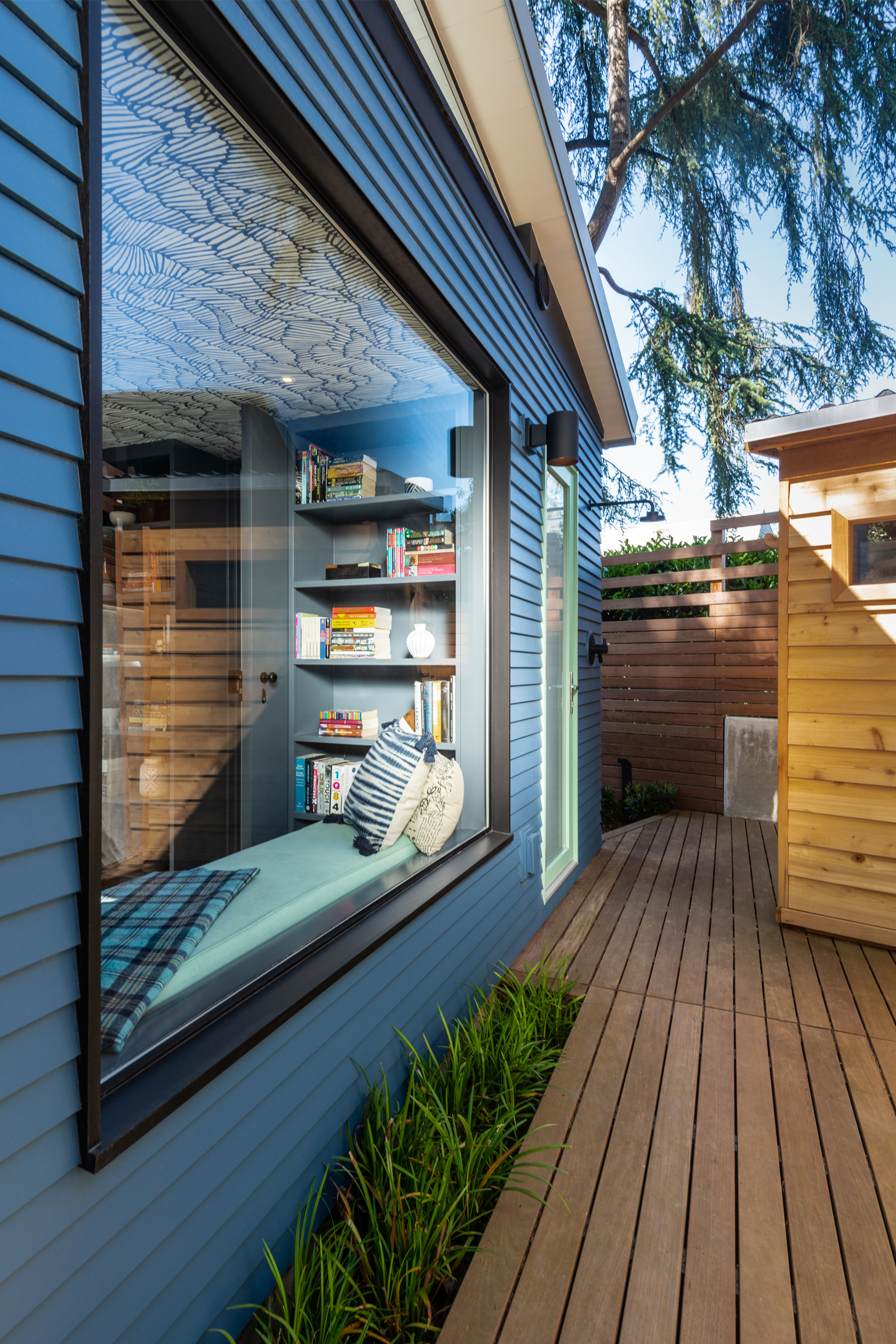
Outdoor Shower Behind our Backyard Reading Retreat Project
This outdoor shower is directly outside an interior shower allowing you to easily go between indoors and outdoors.
The key is on-demand hot water. Tankless heating systems make this seamless: instant, consistent temperature without the inefficiency of a tank running constantly. In the Pacific Northwest, where outdoor showers can be in use year-round, that reliability matters. A shower you can step into immediately, even on a January morning after a sauna session is one you’ll actually use.
Design-wise, enclosure is everything: enough privacy to feel removed from the world, but open enough to maintain that connection to sky, trees, and air that makes the experience worth having. Underfoot, we favor large-format stone or quality modified-wood decking. The surface you’re standing on should feel considered. And for the fixture itself, a rain-style ceiling head combined with a secondary handheld gives you real flexibility depending on what you’re doing.
Movement: Yoga Platforms and Purposeful Open Space
Not every wellness moment requires a structure. Some of the most valuable real estate in a backyard retreat is a beautifully designed open platform, a place for morning yoga, stretching, breath work, or simply lying on a mat with a tree canopy overhead.
In the Pacific Northwest, these spaces require thoughtful weather consideration. A yoga platform needs level, non-slip decking (we love durable, sustainable options like Accoya, Kebony, and Arborwood that perform well in our wet climate), shade options for those glorious summer days, and cover for drizzly mornings when you still want to move outside. Adjustable pergolas with operable louvers, or solid-roofed pavilions with open sides, make the space genuinely usable in nearly all conditions.
For clients who work with personal trainers, practice massage, or want flexibility for guests, a covered outdoor room with hardwired electrical, ambient lighting, and heating elements is a real option. There’s a genuine difference between lying on a massage table facing your neighbor’s fence and lying on one facing a wall of sword ferns and Japanese maples with soft rain in the background. That difference is design, and it’s entirely achievable.
Water Beyond the Hot Tub
Water has a unique role in outdoor wellness as it grounds us, masks intrusive noise, and has a measurable effect on stress. In a region where water is part of the landscape’s identity, it would almost be strange not to celebrate it.
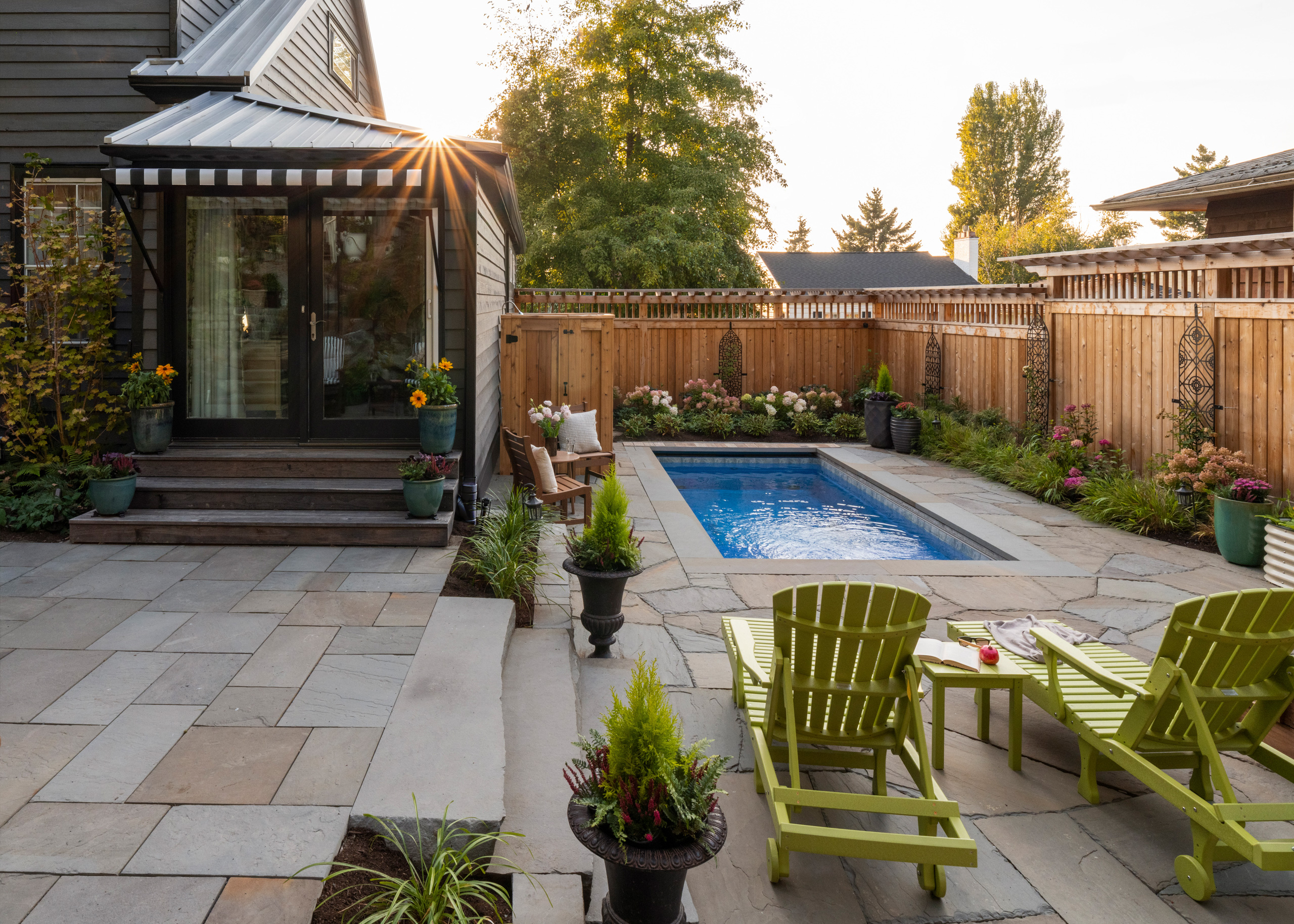
Pools Come in All Shapes and Sizes Perfect for Most Yards
This pool is perfectly sited in this yard to create a calming spot to exercise and relax.
For clients who love to entertain, a resistance pool or lap pool can serve triple duty: daily exercise, a place to cool after the sauna, and a stunning centerpiece for evening gatherings. Properly lit water at night, surrounded by mature plantings and warm ambient light, is one of the most beautiful things you can put in an outdoor space anywhere, but especially here.
The case for getting the design right first.
Here’s where we’ll be direct: the difference between a backyard that happens to have a sauna and a cold tub sitting next to each other, and a true wellness retreat, is professional design. We’ve seen what happens when things aren’t carefully considered: a sauna blocking a view or sitting in permanent shadow; a hot tub just visible from the street; a yoga platform built without accounting for afternoon shadow that sits unused half the year. These aren’t rare mistakes. They’re the default outcome when elements are selected individually rather than designed as a system.
When you bring a landscape architect in at the beginning, the project becomes greater than the sum of its parts. We think about solar orientation, prevailing winds, acoustic privacy, drainage, circulation, long-term plant growth, material performance in our specific climate, and the hundreds of small decisions that accumulate into an experience that either feels considered or doesn't.
We also know trust is earned through specificity. We won’t hand you a mood board and a proposal full of beautiful-sounding words. We’ll walk your property with you, ask the questions that matter, and show you exactly what we’re thinking and why before a single shovel goes in the ground.


